


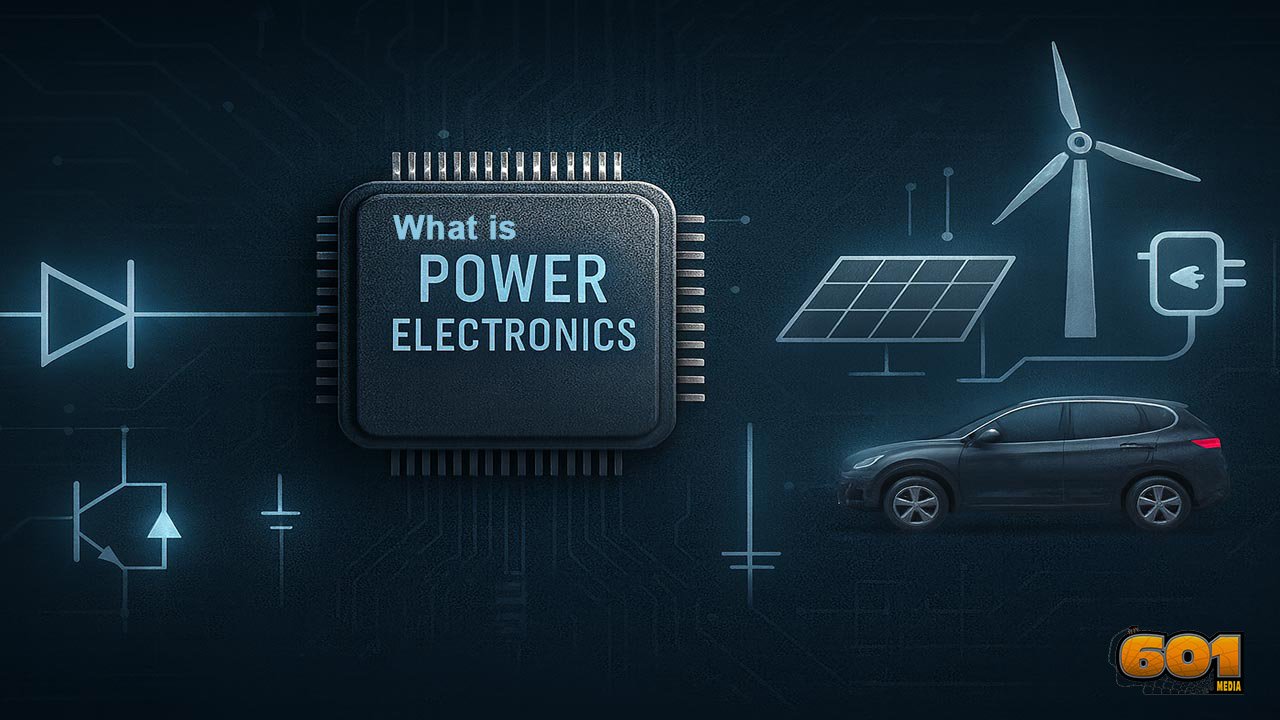
What Is Power Electronics?
Power Electronics: A concise exploration of the field that controls, converts, and conditions electrical power to drive modern technologies—from electric vehicles to renewable energy systems.
Table of Contents
- Definition and Core Principles
- Major Components of Power Electronics
- Types of Power Electronic Converters
- Key Applications Across Industries
- Trends, Innovation, and the Future of Power Electronics
- Top 5 Frequently Asked Questions
- Final Thoughts
- Resources
Definition and Core Principles
Power electronics is the field of engineering focused on converting, controlling, and conditioning electrical power using electronic devices. It manages the flow of electricity with high efficiency by switching semiconductor devices rapidly on and off, enabling precise regulation of voltage, current, and frequency. T
At its core are three principles:
- Power Conversion: Transforming electrical energy from one form to another—AC to DC, DC to AC, or modifying voltage and frequency.
- Power Control: Using semiconductor switches to regulate the magnitude and direction of electrical power.
- Power Conditioning: Ensuring electrical quality—minimizing harmonics, stabilizing voltage, and improving power factor.
Efficiency is the defining metric. Modern power electronic systems routinely achieve 95–99% efficiency thanks to high-speed switching and advanced materials like SiC (silicon carbide) and GaN (gallium nitride).
If you’re brand new to electronics and want a solid foundation before diving deeper into power conversion and control, start with our beginner-friendly guide Electronics 101: A Complete Beginner’s Guide.
Major Components of Power Electronics
Power electronics relies on a combination of active devices, passive components, sensors, controllers, and thermal management systems. The most influential categories include:
Semiconductor Devices
The switches that make power conversion possible:
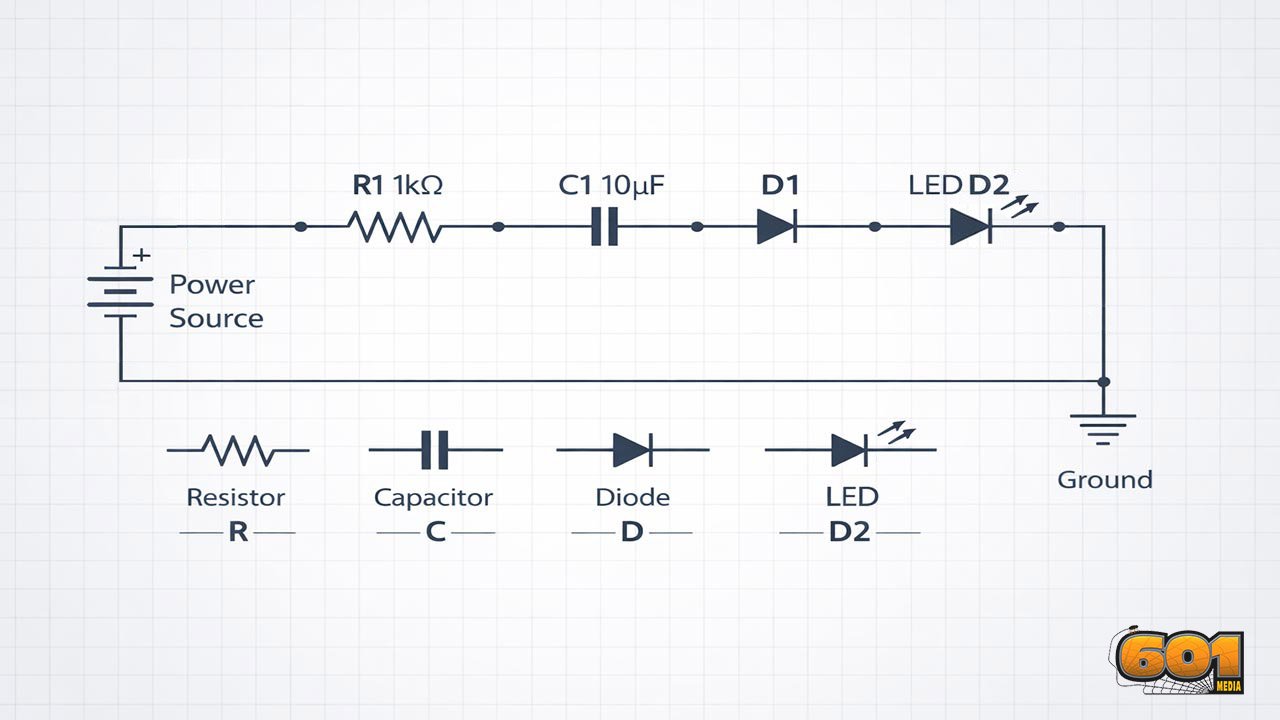
- Diodes: Provide unidirectional current flow.
- MOSFETs: Ideal for low- to mid-power, high-frequency switching.
- IGBTs: Used in high-power environments like EV traction inverters and industrial drives.
- SiC and GaN devices: Deliver higher efficiency, higher temperature operation, and faster switching compared to traditional silicon devices.
Passive Components
- Inductors: Smooth current and store magnetic energy.
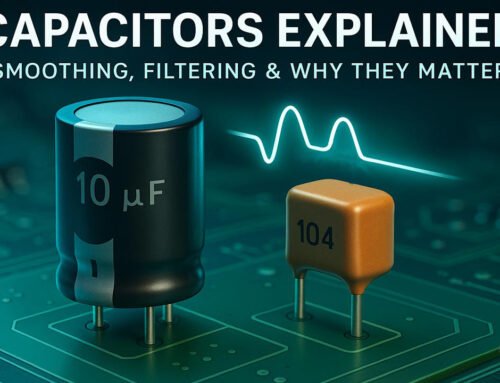
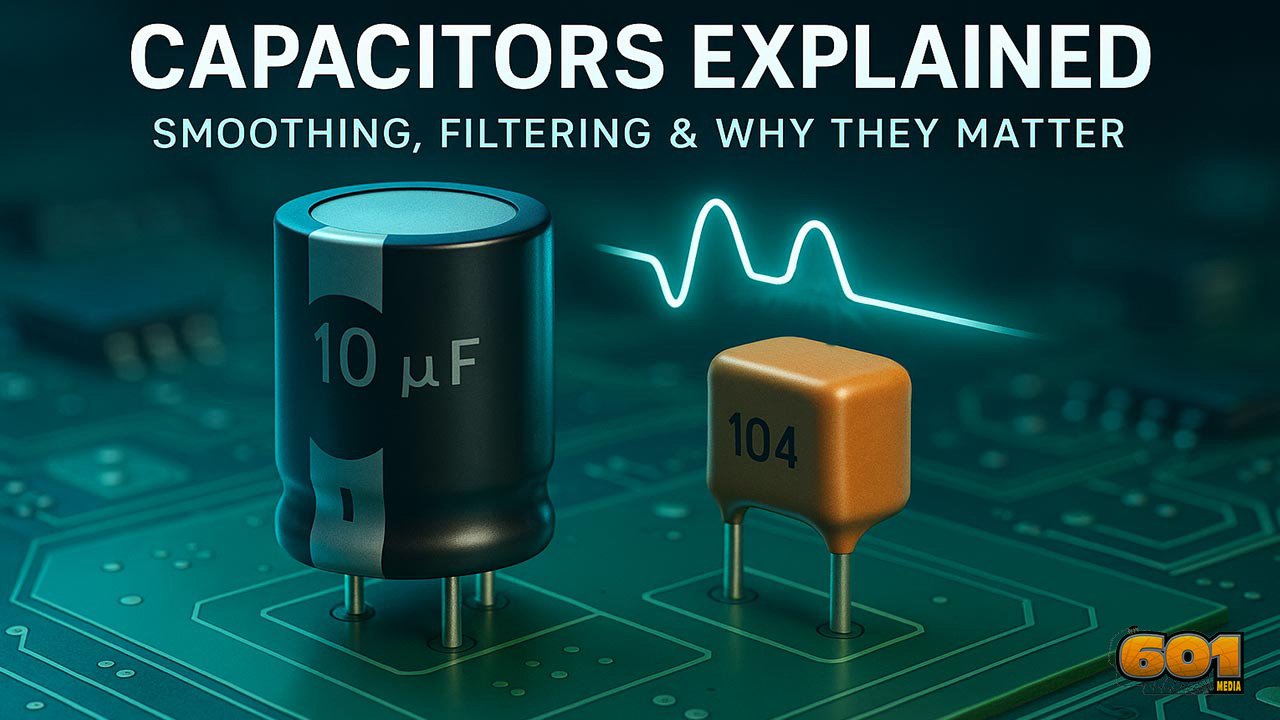
- Capacitors: Stabilize voltage, filter ripple, and store charge.
- Transformers: Used in isolated converters to change voltage levels and provide safety isolation.
Control and Sensing Systems
Modern power electronics depend heavily on digital control:
- Digital Signal Processors (DSPs)
- Microcontrollers (MCUs)
- Gate drivers and isolators
- Current and voltage sensors
Algorithms such as PWM (Pulse Width Modulation) orchestrate device switching with high precision.
Thermal Management
Power electronics dissipate heat. Effective thermal systems include:
- Heat sinks
- Thermal interface materials
- Liquid cooling systems
- Advanced heat spreaders using graphite or vapor chambers
Types of Power Electronic Converters
Power conversion is executed through four main categories of converters.
AC–DC Converters (Rectifiers)
Rectifiers convert AC into regulated DC. Applications:
- Consumer electronics chargers
- HVDC transmission systems
- Industrial motor drives
DC–AC Converters (Inverters)
Inverters convert DC into AC with controlled frequency and voltage. Applications:
- Solar power inverters
- Electric vehicle traction systems
- Uninterruptible power supplies (UPS)
DC–DC Converters
These change one DC voltage level to another. They include:
- Buck converters (step-down)
- Boost converters (step-up)
- Buck-boost and flyback topologies
AC–AC Converters
Used to adjust AC voltage, frequency, or both. Examples:
- Solid-state transformers
- Matrix converters
- Variable frequency drives (VFDs)
Key Applications Across Industries
Power electronics is foundational to nearly every modern electrical technology. Its impact spans energy, transportation, manufacturing, and consumer devices.
1. Renewable Energy & Grid Systems
Power electronics enables solar and wind energy to integrate with the grid by converting naturally variable output into stable, synchronized power. Key uses:
- Solar PV inverters
- Wind turbine converters
- Grid-tied inverters for microgrids
- HVDC and FACTS systems for long-distance transmission and grid stability
2. Electric Vehicles (EVs)
Power electronics is at the heart of every EV. Critical components include:
- Onboard chargers
- Traction inverters controlling motor torque
- DC–DC converters for low-voltage systems
- Fast-charging infrastructure
Modern EV inverters using SiC devices significantly increase driving range by improving efficiency.
3. Industrial Automation & Drives
Manufacturing relies heavily on variable-speed drives, robotics, and automation systems powered by controlled electric motors. Benefits include:
- Higher energy efficiency
- Precision control
- Reduced mechanical wear
4. Consumer Electronics & Computing
Power supplies in laptops, smartphones, and data centers use high-frequency, high-efficiency converters. Advanced topologies reduce size, heat, and energy consumption—critical for sustainability and performance.
5. Aerospace, Defense & High-Reliability Systems
Applications include:
- More-electric aircraft systems
- Satellite power conditioning
- Ruggedized power modules
Trends, Innovation, and the Future of Power Electronics
The field is undergoing a significant transformation driven by materials science, digitalization, and global electrification.
Wide-Bandgap Semiconductors
SiC and GaN devices are enabling:
- Higher switching frequencies
- Higher power density
- Reduced cooling requirements
- Smaller, lighter systems
Research shows SiC inverters can boost EV range by 5–10% due to lower losses.
AI-Driven Power Control
Machine learning is emerging in:
- Predictive thermal management
- Adaptive switching strategies
- Fault prediction
- Efficiency optimization
Solid-State Transformers (SSTs)
SSTs offer:
- Bidirectional power flow
- Real-time power conditioning
- Compact design compared to traditional transformers
Modular Power Electronics
Modular designs simplify maintenance and scalability in:
- Data centers
- Grid systems
- Microgrids
Top 5 Frequently Asked Questions
Why is power electronics important?
It enables efficient conversion and control of electricity, making modern energy systems, EVs, and digital devices possible.
What is the difference between power electronics and traditional electronics?
Traditional electronics process signals; power electronics handle and convert high levels of electrical power.
Which semiconductor devices are used in power electronics?
MOSFETs, IGBTs, diodes, and wide-bandgap devices like SiC and GaN.
How efficient are modern power converters?
State-of-the-art converters achieve 95–99% efficiency depending on topology and semiconductor technology.
What industries depend most on power electronics?
Renewables, electric vehicles, industrial automation, aerospace, consumer electronics, and power grids.
Final Thoughts
The most important takeaway is that power electronics is the silent backbone of global electrification. Its ability to convert and control electrical energy with ultrahigh efficiency makes renewable energy viable, electric mobility practical, and modern electronics compact and sustainable. As wide-bandgap materials, AI-enhanced control systems, and solid-state architectures advance, power electronics will shape the future of energy, mobility, and digital infrastructure with unprecedented performance and scalability.
Resources
- IEEE Power Electronics Society
- Navid Zargari, “Power Electronics in Modern Energy Systems,” IEEE Transactions
- Yole Group SiC Market Report, 2024
- NREL (National Renewable Energy Laboratory) – Power Electronics Research
Leave A Comment