


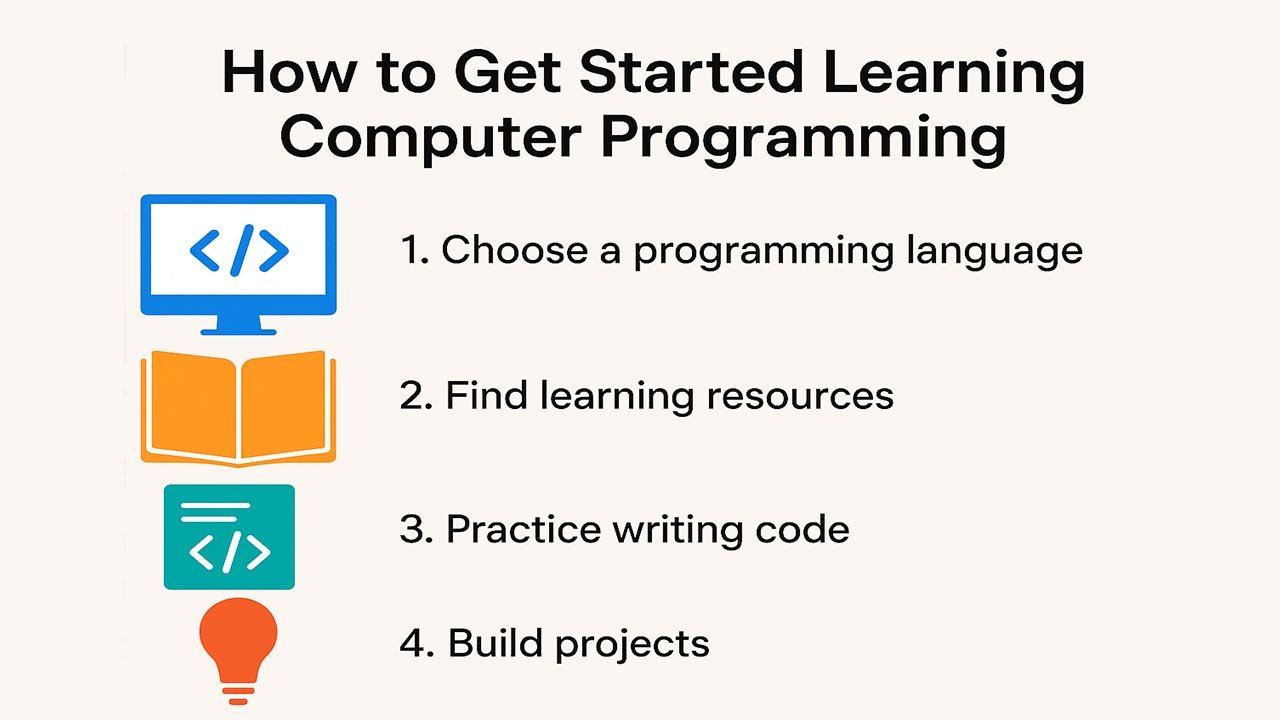
How to Get Started Learning Computer Programming
Learning computer programming can feel overwhelming at first, but the path becomes much clearer once you understand how programming works, what skills matter most, and how to structure your learning. This guide breaks down programming into practical, manageable steps so beginners can build real skills with confidence and purpose.
Table of Contents
- What Computer Programming Really Is
- Why Learning Programming Is a Valuable Skill
- How to Choose Your First Programming Language
- Programming Fundamentals You Must Learn First
- Tools and Environments You Need to Start Coding
- Best Learning Resources for Beginners
- How to Practice Programming Effectively
- Common Beginner Mistakes to Avoid
- Programming Career Paths and Next Steps
- Top 5 Frequently Asked Questions
- Final Thoughts
- Resources
What Computer Programming Really Is
Computer programming is the process of writing instructions that computers can understand and execute. These instructions control everything from mobile apps and websites to financial systems, medical devices, and artificial intelligence models. At its core, programming is about problem solving. You define a problem, break it into smaller steps, and translate those steps into code. Modern programming relies on high-level languages that are designed to be readable by humans. These languages act as intermediaries between human logic and machine execution, allowing developers to build complex systems efficiently.
Why Learning Programming Is a Valuable Skill
Programming has become a foundational skill across industries. According to labor market data from technology workforce studies, software-related roles continue to grow faster than most other professions. Even outside traditional tech jobs, programming skills improve analytical thinking, automation capability, and digital literacy.
Organizations increasingly rely on software to scale operations, analyze data, and deliver digital services. Learning to code gives individuals leverage in the job market and the ability to create solutions instead of just consuming them.
How to Choose Your First Programming Language
The best first programming language is one that balances simplicity with real-world usefulness. For most beginners, general-purpose languages with clear syntax are ideal. Python is widely recommended because it reads almost like plain English and is used in web development, data analysis, automation, and artificial intelligence. JavaScript is another strong option, especially for those interested in web development, as it powers interactive websites and browser-based applications. The key is not choosing the “perfect” language, but choosing one and sticking with it long enough to understand core concepts that transfer across languages.
Programming Fundamentals You Must Learn First
Every programming language shares common building blocks. Understanding these fundamentals matters more than memorizing syntax. Variables store data, such as numbers or text. Control structures like conditionals and loops control how code makes decisions and repeats tasks. Functions organize reusable logic, while data structures manage collections of information efficiently. Once these concepts are understood, learning additional languages becomes significantly easier because the underlying logic stays the same.
Tools and Environments You Need to Start Coding
To write and run code, beginners need a development environment. This typically includes a code editor and a runtime or interpreter for the chosen language. Beginner-friendly editors such as Visual Studio Code provide syntax highlighting, error detection, and debugging tools. These features reduce friction and help learners understand mistakes faster. Version control tools, such as Git, are not required immediately but become essential as projects grow.
Best Learning Resources for Beginners
High-quality learning resources combine explanation with hands-on practice. Interactive platforms allow learners to write code directly in the browser and receive immediate feedback. Structured online courses provide guided paths, while documentation teaches learners how professionals reference information. Books and tutorials remain valuable, but beginners should prioritize resources that encourage experimentation rather than passive reading.
How to Practice Programming Effectively
The fastest way to learn programming is by building small projects. Simple programs such as calculators, task trackers, or basic games reinforce concepts far better than abstract exercises. Consistency matters more than intensity. Practicing for thirty minutes a day leads to better long-term retention than occasional marathon sessions. Debugging mistakes is part of the learning process and helps develop problem-solving resilience.
Common Beginner Mistakes to Avoid
One common mistake is trying to learn too many languages at once. This leads to confusion and shallow understanding. Another mistake is avoiding errors instead of learning from them. Errors are signals that guide improvement. Beginners also often underestimate the importance of fundamentals, rushing into frameworks before mastering core logic. Strong foundations accelerate progress later.
Programming Career Paths and Next Steps
Once comfortable with the basics, learners can specialize. Web developers focus on building websites and applications. Data analysts and machine learning engineers work with data and algorithms. Software engineers design scalable systems across platforms. The next step is building a portfolio of projects that demonstrate skills. Employers value practical evidence of problem solving more than certificates alone.
Top 5 Frequently Asked Questions
Final Thoughts
Learning computer programming is less about talent and more about persistence, curiosity, and structured practice. By focusing on fundamentals, choosing the right tools, and building real projects, beginners can turn complexity into clarity. Programming is a skill that compounds over time, opening doors to innovation, creativity, and long-term career growth.







Leave A Comment