


Soldering for Beginners: Tools, Techniques & Common Mistakes
Soldering, for beginners, is one of the most essential hands-on skills in electronics, prototyping, and hardware innovation. Whether you are repairing a loose wire, assembling a DIY kit, or building your first circuit board, soldering is often the bridge between an idea and a working product. For beginners, however, soldering can feel intimidating. The tools are unfamiliar, the temperatures are extreme, and mistakes can permanently damage components. This guide breaks down soldering in practical terms, focusing on the right tools, proven techniques, and the most common errors first-time solderers make.
Table of Contents
- What Soldering Is and Why It Matters
- Essential Tools for First-Time Soldering
- Basic Soldering Techniques Explained
- Common Beginner Mistakes and How to Avoid Them
- Safety and Best Practices
- Building Skill and Confidence Over Time
- Top 5 Frequently Asked Questions
- Final Thoughts
- Resources
What Soldering Is and Why It Matters
Soldering is the process of joining metal components by melting a filler metal, called solder, into the joint. Unlike welding, soldering does not melt the base materials. This makes it ideal for delicate electronics where heat control is critical. In printed circuit boards, solder provides both mechanical strength and electrical conductivity. A poor solder joint can cause intermittent failures, signal loss, or complete circuit failure. In professional electronics manufacturing, soldering quality is one of the most closely monitored variables because even microscopic defects can compromise reliability.
Essential Tools for First-Time Soldering
A beginner does not need expensive equipment, but the quality of tools has a direct impact on learning speed and results. A temperature-controlled soldering iron is the most important investment. Fixed-temperature irons often run too hot or too cold, increasing the chance of cold joints or burned components. Research from IPC standards shows that stable tip temperature significantly improves solder joint consistency.
Solder wire should be electronics-grade, typically a rosin-core alloy. Leaded solder, commonly 60/40 tin-lead, melts at a lower temperature and is easier for beginners to use, though many regions mandate lead-free solder for compliance. Lead-free solder requires higher heat and better technique.
Flux is another critical tool often overlooked by beginners. Flux removes oxidation and allows solder to flow smoothly. Even rosin-core solder benefits from additional flux, especially when working with older components or reused parts.
Other essential tools include a damp sponge or brass wool for tip cleaning, tweezers for component placement, a soldering stand for safety, and a desoldering pump or braid to correct mistakes.
Basic Soldering Techniques Explained
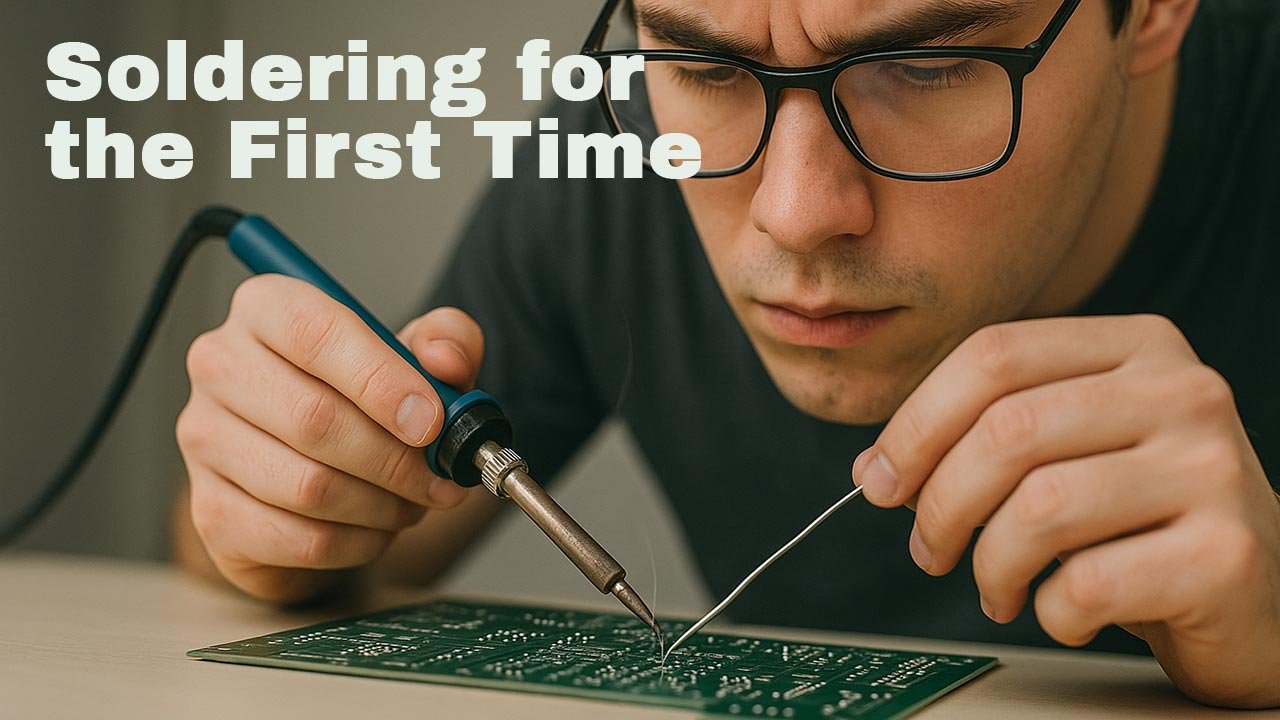
Good soldering technique is about heat control and timing rather than force. The iron tip should touch both the component lead and the pad simultaneously, heating them evenly. Solder is then fed into the joint, not directly onto the iron. When done correctly, the solder flows smoothly around the joint, forming a shiny, concave shape.
One of the most common beginner misunderstandings is holding the iron in place for too long. Excessive heat can lift PCB pads, damage insulation, or degrade sensitive components. Most joints should be completed within two to three seconds.
Tip maintenance is also part of technique. A clean, tinned tip transfers heat efficiently. Oxidized tips reduce heat flow and cause solder to bead instead of spread.
Common Beginner Mistakes and How to Avoid Them
Cold solder joints are the most frequent issue among beginners. These joints appear dull or grainy and result from insufficient heat or movement during cooling. Cold joints may conduct electricity inconsistently, leading to hard-to-diagnose failures.
Another common mistake is using too much solder. Excess solder can create bridges between pads, causing short circuits. In surface-mount work, even a fraction of a millimeter matters.
Beginners also tend to neglect flux, assuming solder alone is enough. Industry studies show flux usage reduces solder defects by over 60 percent in manual assembly environments.
Finally, improper iron temperature is a recurring problem. Too low and the solder will not flow; too high and components degrade. Most through-hole soldering works best between 350°C and 380°C, depending on solder type.
Safety and Best Practices
Soldering is generally safe when proper precautions are followed. Ventilation is essential because flux fumes can irritate the respiratory system. Safety glasses protect against solder splatter, and a heat-resistant surface prevents accidental burns or fire hazards.
Washing hands after soldering is critical, especially when using leaded solder. Studies by occupational health agencies consistently emphasize hygiene as the most effective way to minimize exposure risk.
Building Skill and Confidence Over Time
Soldering is a skill built through repetition. Beginners should practice on scrap boards before working on critical projects. Over time, muscle memory develops, heat control improves, and visual inspection becomes intuitive.
From an innovation management perspective, soldering literacy empowers faster prototyping and reduces dependency on external manufacturing during early development stages. Teams that maintain hands-on hardware skills often iterate faster and catch design flaws earlier.
Top 5 Frequently Asked Questions
Final Thoughts
Soldering is not just a technical task; it is a foundational skill that enables experimentation, repair, and innovation. The difference between frustration and confidence often comes down to understanding heat, using the right tools, and avoiding common beginner mistakes. By focusing on technique rather than speed, first-time solderers can build reliable connections and develop a skill that scales from hobby projects to professional hardware development.
Resources
- IPC-A-610 Acceptability of Electronic Assemblies – IPC Organization
- NASA Workmanship Standards for Soldered Electrical Connections
- Adafruit Learning System: Guide to Excellent Soldering
- Occupational Safety and Health Administration (OSHA) – Soldering Safety Guidelines


Leave A Comment