


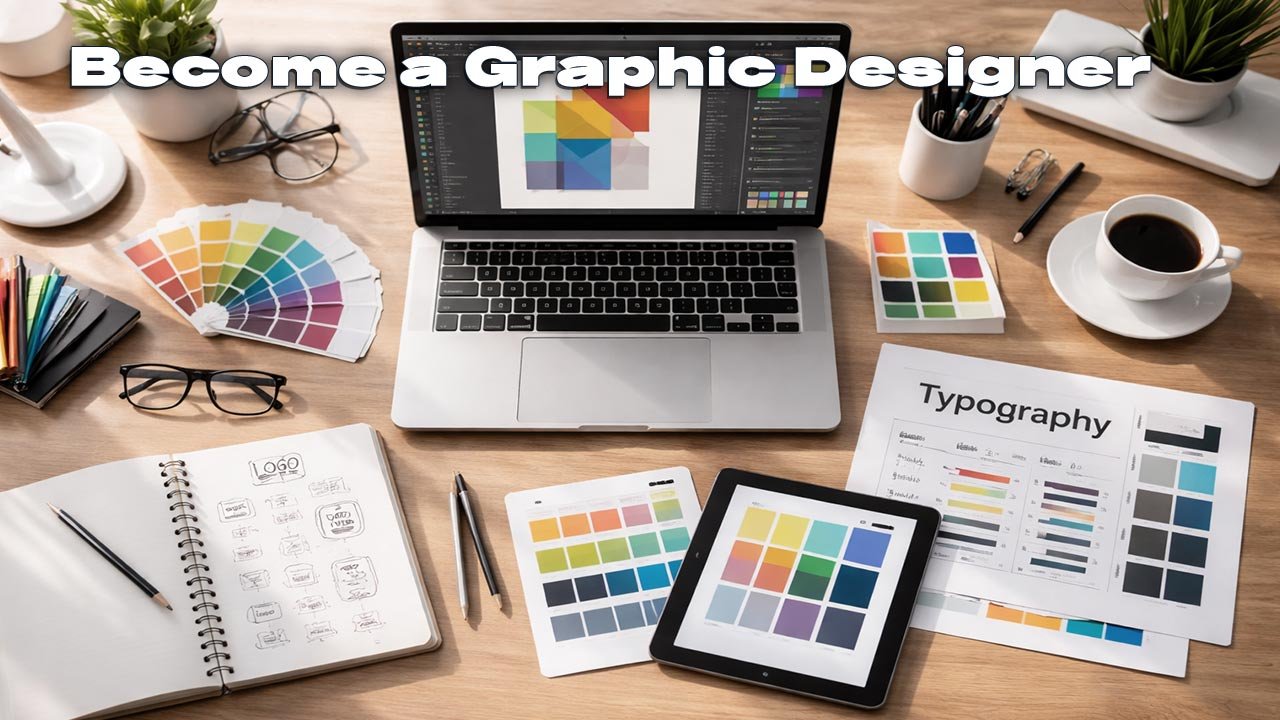
How to Become a Graphic Designer
Graphic design is no longer a niche creative skill reserved for agencies and art schools. It has become a core business function across marketing, technology, media, and product development. This guide explains how to become a graphic designer step by step, focusing on skills, tools, education paths, and career strategies that work in today’s digital economy.
Table of Contents
- Understanding Graphic Design
- Essential Skills Every Graphic Designer Needs
- Education Paths: Degree vs Self-Taught
- Graphic Design Tools and Software
- How to Build a Strong Graphic Design Portfolio
- Career Paths and Job Opportunities
- Freelance vs Full-Time Graphic Design
- How to Get Your First Graphic Design Job
- Top 5 Frequently Asked Questions
- Final Thoughts
- Resources
Understanding Graphic Design
Graphic design is the practice of visual communication. It combines typography, color, imagery, layout, and hierarchy to convey messages clearly and persuasively. Designers solve problems visually, whether the goal is to increase brand recognition, guide user behavior, or simplify complex information. Modern graphic design spans multiple disciplines including branding, digital marketing, user interface design, motion graphics, and packaging. According to the U.S. Bureau of Labor Statistics, design roles increasingly intersect with digital products and online media, making adaptability a critical trait for long-term success.
Essential Skills Every Graphic Designer Needs
Successful graphic designers balance creativity with technical precision and strategic thinking. Visual fundamentals form the foundation. These include color theory, typography, composition, contrast, alignment, and visual hierarchy. Without mastery of these principles, even advanced software skills fail to produce effective work. Communication skills are equally important. Designers must interpret briefs, ask clarifying questions, present concepts, and justify decisions to clients or stakeholders. Design is collaborative by nature, not isolated artistry. Problem-solving defines professional-level design. Each project begins with a constraint, whether budget, audience, platform, or brand guidelines. Designers who approach work strategically deliver measurable value rather than decorative visuals.
Education Paths: Degree vs Self-Taught
There is no single path to becoming a graphic designer. Traditional degrees, online certifications, and self-directed learning can all lead to successful careers. A formal degree offers structured learning, critique, and networking. Design programs teach theory deeply and simulate real-world projects. However, they require significant time and financial investment. Self-taught designers rely on online courses, tutorials, books, and practice. Platforms like Coursera, Udemy, and Skillshare provide affordable access to industry-relevant training. Many hiring managers prioritize portfolio quality over academic credentials. Bootcamps and certificate programs offer a hybrid option. These focus on practical skills, industry tools, and rapid portfolio development, making them attractive for career changers.
Graphic Design Tools and Software
Professional designers must be fluent in industry-standard tools. Adobe Creative Cloud remains the dominant ecosystem. Photoshop is used for image manipulation, Illustrator for vector graphics and logos, and InDesign for layout and print design. Figma and Sketch are essential for digital and interface design. Figma, in particular, has become the standard for collaborative design workflows due to its cloud-based functionality. Canva plays a role in content-focused environments but is not a substitute for professional design software. Understanding when to use lightweight tools versus advanced platforms is part of professional judgment.
How to Build a Strong Graphic Design Portfolio
A portfolio is the single most important asset for an aspiring graphic designer. It demonstrates skill, thinking, and range. Quality matters more than quantity. Five to ten strong projects outperform dozens of average ones. Each project should show the problem, process, and final outcome. Personal projects are acceptable when starting out. Redesigning existing brands, creating fictional clients, or contributing to open-source initiatives builds experience quickly. Case studies elevate portfolios. Explaining design decisions, constraints, and results shows strategic thinking, which employers value as much as visual execution.
Career Paths and Job Opportunities
Graphic designers work across industries including advertising, technology, healthcare, education, and entertainment. Common roles include brand designer, marketing designer, UI designer, production artist, and creative strategist. With experience, designers can advance into art director or creative director positions. The rise of digital products has increased demand for designers who understand both aesthetics and usability. According to LinkedIn’s Emerging Jobs Report, design roles connected to digital experiences continue to grow despite automation trends.
Freelance vs Full-Time Graphic Design
Full-time roles provide stability, mentorship, and structured growth. They are ideal for early-career designers seeking feedback and collaboration. Freelancing offers flexibility and income scalability but requires business skills. Designers must manage clients, contracts, pricing, and marketing. Many professionals transition into freelancing after gaining industry experience. Hybrid careers are common. Designers may work full-time while building freelance clients or selling digital products such as templates and brand kits.
How to Get Your First Graphic Design Job
Breaking into the industry requires persistence and strategic positioning.
Tailor portfolios to specific roles. A branding-focused portfolio differs from a UI design portfolio. Hiring managers want relevance, not generality. Networking accelerates opportunity. Engaging on LinkedIn, joining design communities, and attending virtual events increases visibility. Internships, apprenticeships, and contract work often serve as entry points. Many designers land full-time roles after proving reliability and skill in temporary positions.
Top 5 Frequently Asked Questions
Final Thoughts
Becoming a graphic designer is less about talent and more about discipline, curiosity, and problem-solving. The most successful designers continuously refine their skills, adapt to new tools, and think strategically about communication. In an economy driven by attention and experience, graphic design remains a powerful and resilient career path.
Resources
- U.S. Bureau of Labor Statistics – Graphic Designers Occupational Outlook
- Adobe Creative Cloud Learning Resources
- LinkedIn Emerging Jobs Report
- Interaction Design Foundation





Leave A Comment