

How to Become a Web Designer
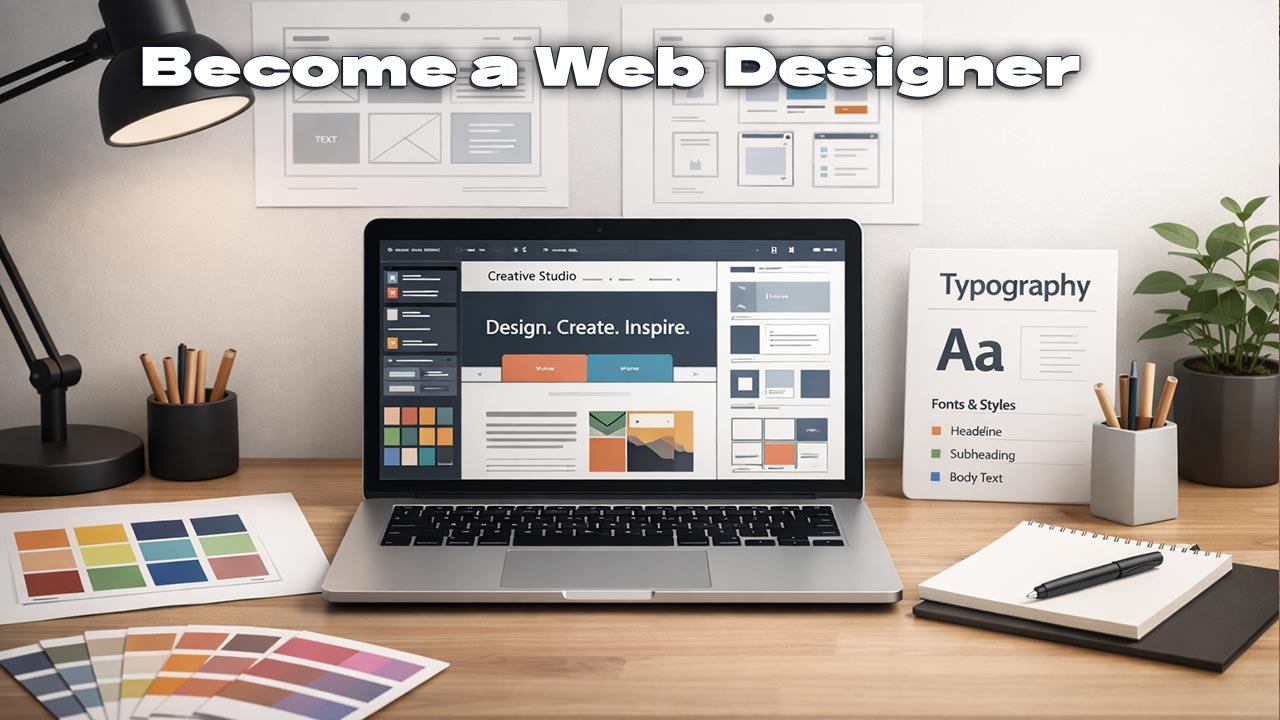
Web design is one of the most accessible and future-proof digital careers. It blends creativity, technology, and problem-solving into a profession that is in constant demand. As businesses continue shifting online, skilled web designers are critical to building trust, usability, and brand credibility. This guide explains exactly how to become a web designer, what skills you need, and how to turn those skills into a sustainable career.
Table of Contents
- What Web Design Really Is
- Core Skills Every Web Designer Needs
- Education and Learning Paths
- Essential Web Design Tools
- Building a Professional Portfolio
- How to Get Your First Clients or Job
- Career Growth and Salary Potential
- Top 5 Frequently Asked Questions
- Final Thoughts
- Resources
What Web Design Really Is
Web design focuses on how websites look, feel, and function from a user perspective. It includes layout, color systems, typography, navigation, responsiveness, and accessibility. Unlike web development, which emphasizes code logic and databases, web design prioritizes user experience and visual communication. Modern web designers often collaborate with developers, marketers, and product managers to align design with business goals.
Core Skills Every Web Designer Needs
Successful web designers combine creative, technical, and strategic skills. Visual design fundamentals include color theory, spacing, typography, and layout hierarchy. User experience design focuses on usability, accessibility, and user behavior patterns. Technical literacy is also essential, including HTML, CSS, and a basic understanding of JavaScript. According to Adobe’s Digital Trends Report, companies that prioritize user experience are 1.5 times more likely to outperform competitors financially.
Education and Learning Paths
There is no single required path to becoming a web designer. Many professionals are self-taught using online platforms like Coursera, freeCodeCamp, and Google UX certificates. Others pursue degrees in graphic design, interaction design, or digital media. Bootcamps offer accelerated, hands-on learning and often include portfolio development. From an innovation management perspective, continuous learning matters more than formal credentials because design standards and tools evolve rapidly.
Essential Web Design Tools
Modern web designers rely on specialized tools to design, prototype, and collaborate. Figma and Adobe XD dominate interface design due to real-time collaboration features. Webflow allows designers to build production-ready websites visually. Canva is often used for quick assets, while Notion and FigJam support documentation and ideation. Learning these tools improves workflow efficiency and aligns designers with industry expectations.
Building a Professional Portfolio
A portfolio is the single most important asset for a web designer. Employers and clients care more about demonstrated skill than resumes. Strong portfolios showcase real or simulated projects, explain design decisions, and highlight problem-solving ability. Each project should include goals, wireframes, final designs, and outcomes. Case-study-based portfolios convert better because they show strategic thinking, not just visuals.
How to Get Your First Clients or Job
New web designers typically start through freelancing platforms, internships, or junior roles. Upwork, Fiverr, and LinkedIn are common entry points. Networking in design communities and sharing work on platforms like Dribbble and Behance increases visibility. From a technology management standpoint, personal branding and reputation systems significantly influence early career acceleration.
Career Growth and Salary Potential
Web design offers strong salary and growth potential. According to the U.S. Bureau of Labor Statistics, web designer roles are projected to grow faster than average, with median salaries exceeding $80,000 in the United States. Designers can specialize in UX design, product design, accessibility, or transition into leadership roles such as design manager or product owner.
Top 5 Frequently Asked Questions
Final Thoughts
Becoming a web designer is not about mastering tools alone. It is about understanding users, solving real problems, and continuously adapting to new technologies. Those who combine design thinking with business awareness position themselves for long-term success. Web design is not just a job; it is a scalable, innovation-driven career.
Resources
- U.S. Bureau of Labor Statistics – Web Designers
- Interaction Design Foundation
- freeCodeCamp
- Adobe Digital Trends Report





Leave A Comment