


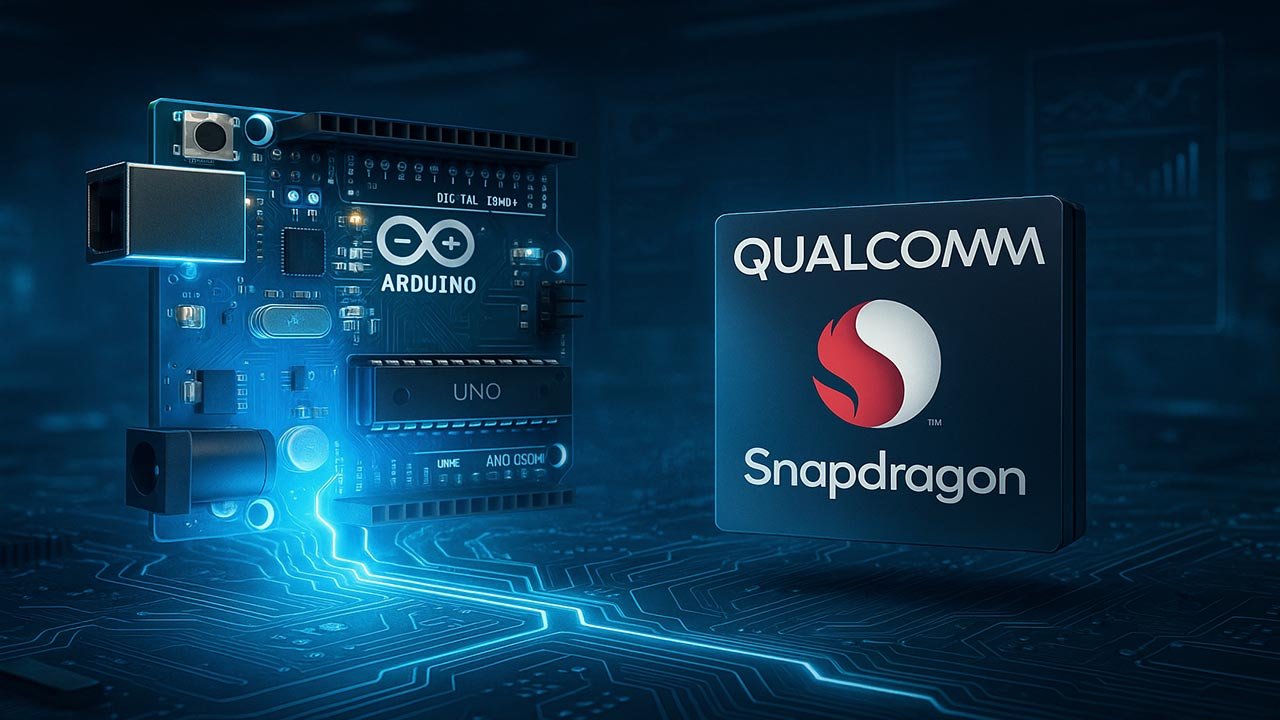
Why Qualcomm’s $millions deal for Arduino could change the maker world forever
The acquisition of Arduino by Qualcomm marks a turning point in the maker world. While the move promises more powerful hardware, AI-ready boards, and stronger integration with edge computing, it raises concerns around the future of open-source values, accessibility, and costs. For hobbyists, students, and hardware tinkerers, this shift could bring exciting possibilities — but also uncertainty.
Table of Contents
- Background: Who Are Arduino and Qualcomm?
- What Happened: The Acquisition and What Was Announced
- What It Promises for Makers: More Power & New Tools
- Community Concerns: Open Source, Access, and Costs
- What Might Change (and What Might Stay the Same)
- Top 5 Frequently Asked Questions
- Final Thoughts
- Resources
Background: Who Are Arduino and Qualcomm?
Arduino is a globally known open-source hardware and software platform that has empowered millions of DIY electronics enthusiasts, educators, and developers to build microcontroller-based projects — from simple LED blinkers to advanced robotics and IoT devices. Qualcomm is a leading semiconductor giant, famous for supplying the Snapdragon chips in billions of smartphones and for its ambitions beyond mobile — into areas like automotive, IoT, and edge computing.
For years, Arduino has stood out because of its affordability, simplicity, wide community support, and open-source ethos — enabling even beginners to enter electronics and embedded programming with minimal friction.
What Happened: The Acquisition and What Was Announced
On October 7, 2025, Qualcomm announced that it had acquired Arduino. Though the financial terms were not disclosed, both companies said that Arduino will continue operating under its brand, maintaining its mission, tools, and support for multiple semiconductor providers — not limited to Qualcomm chips. Along with the acquisition, they unveiled a new board: the Arduino UNO Q. The UNO Q features a “dual-brain” architecture: a powerful SoC (system-on-chip) from Qualcomm — the Dragonwing QRB2210 processor — providing Linux support, AI acceleration, graphics, and connectivity; and a real-time microcontroller (STM32U585) for precise control and real-time tasks. They also introduced a new development environment, Arduino App Lab, designed to support Linux-based OS, real-time OS, Python, and AI workflows — simplifying prototyping and development of AI/edge applications.
What It Promises for Makers: More Power & New Tools
**1. Access to stronger hardware and AI/edge capabilities** With the UNO Q combining a Qualcomm SoC and microcontroller, makers now get a single-board platform capable of running a full Linux OS and handling heavier workloads — useful for robotics, AI tasks like vision or sound processing, and more complex IoT devices.
2. Unified development ecosystem
The new Arduino App Lab — offering support for Linux, real-time OS, Python, and AI workflows — could lower the barrier for turning a prototype into an AI-enabled device. This unified toolset might make life easier for developers, especially those working on edge computing and embedded AI.
3. Bridge between hobbyist use and industrial/edge applications
By leveraging Qualcomm’s existing investments and infrastructure — including its previous acquisitions of other IoT/AI firms — Arduino under Qualcomm might become a bridge between small-scale hobbyist projects and serious industrial or IoT deployments. This could open new opportunities for makers who want to scale.
4. Continued support and credibility
Qualcomm’s backing may bring improved supply chain stability, better support, and more resources — potentially reducing downtime, supply shortages, or discontinued boards, which have sometimes plagued small hardware makers. And with Arduino claiming it will keep its platform open and support chips beyond Qualcomm’s, there’s at least a formal commitment to flexibility.
Community Concerns: Open Source, Access, and Costs
**1. Fear of losing open-source innocence** The maker community — which has long valued Arduino for its open-source hardware/software — is skeptical. Some worry that a large corporate owner could undermine the openness that made Arduino popular, perhaps through licensing changes, vendor lock-in, or restrictions.
Specifically, after the acquisition, updated terms of service and privacy policies caused alarm: vendors such as Adafruit Industries criticized the changes as shifting toward a more “tightly controlled corporate platform.”
2. Risk of increased cost, or reduced accessibility
Because Qualcomm is used to selling chips in large volumes for industry and enterprise, makers worry that boards might become more expensive or harder to obtain for individuals. In one sense, a board like UNO Q — with more power — could end up more costly than traditional Arduino boards, making it less ideal for simple or budget-driven projects.
3. Shift in focus away from education / hobby toward AI / industrial use
The “edge AI” promise may lead to a future where most resources go into AI, robotics, and industrial-grade deployments. That could marginalize simpler, low-cost microcontroller boards that attracted students, beginners, and hobbyists.
4. Trust and long-term commitment concerns
Many makers fear that the corporate acquisition — while presented with reassurances — may not guarantee long-term adherence to openness. If priorities shift (for profitability, corporate clients, licensing), the original culture of Arduino could be eroded.
What Might Change (and What Might Stay the Same)
**Likely to stay the same (for now):** – Arduino formally committed to preserving its open-source ethos and continuing support for multiple chip vendors, not just Qualcomm. – Existing boards and the established ecosystem — including community-maintained libraries, open hardware schematics, the official IDE, and the maker community — are expected to continue functioning.
Possible changes over time:
A shift toward more powerful, AI-ready boards — which may gradually redefine “Arduino project” from simple controllers to fully capable edge devices (Linux, AI, sensors, connectivity).
Higher price points or fewer low-cost offerings — especially if Qualcomm steers Arduino toward professional, industrial, or IoT markets.
Changes in licensing or terms of service (especially for services, cloud, or proprietary parts), which could limit some freedoms or increase corporate control over certain features.
Greater supply-chain stability and possibly more formal support — but perhaps with more corporate gatekeeping or focus on commercial deployment over hobbyist use.
Top 5 Frequently Asked Questions
Final Thoughts
The acquisition of Arduino by Qualcomm is a bold move — one that could reshape the maker world in profound ways. On the positive side, it offers a pathway for hobbyists and indie developers to access powerful, AI-ready hardware, bridging the gap between DIY prototyping and industrial-grade edge computing. With the new UNO Q and the App Lab ecosystem, projects that once required expensive hardware or complex setup might become accessible to a much broader audience.
However, this shift comes with genuine risks. The community that built Arduino thrived on openness, simplicity, affordability, and grassroots innovation. As corporate strategy and performance requirements inevitably influence product direction, there’s a real possibility that the very values that made Arduino popular could be diluted — with higher costs, reduced accessibility, or evolving license terms.
For makers, students, educators, and hobbyists, the moment calls for vigilance: enjoy the new capabilities, but hold the platform — and its owners — accountable. The future of “maker culture + open hardware” may depend not just on what new boards and features arrive, but on whether the community, and the values of openness and accessibility, stay at the heart of the platform.
Resources
- Qualcomm acquires Arduino to make AI development more accessible
- Qualcomm acquires open-source hardware and software company Arduino
- With Arduino deal, Qualcomm pushes deeper into open-source and edge AI development
- Qualcomm Acquires Arduino, Announces Arduino UNO Q Built On Dragonwing
- A new chapter for Arduino – with Qualcomm, UNO Q, and you!
- Qualcomm snaps up Arduino and promises it independence
- Qualcomm is acquiring DIY electronics platform Arduino
- Makers slam Qualcomm for tightening the clamps on Arduino





Leave A Comment