


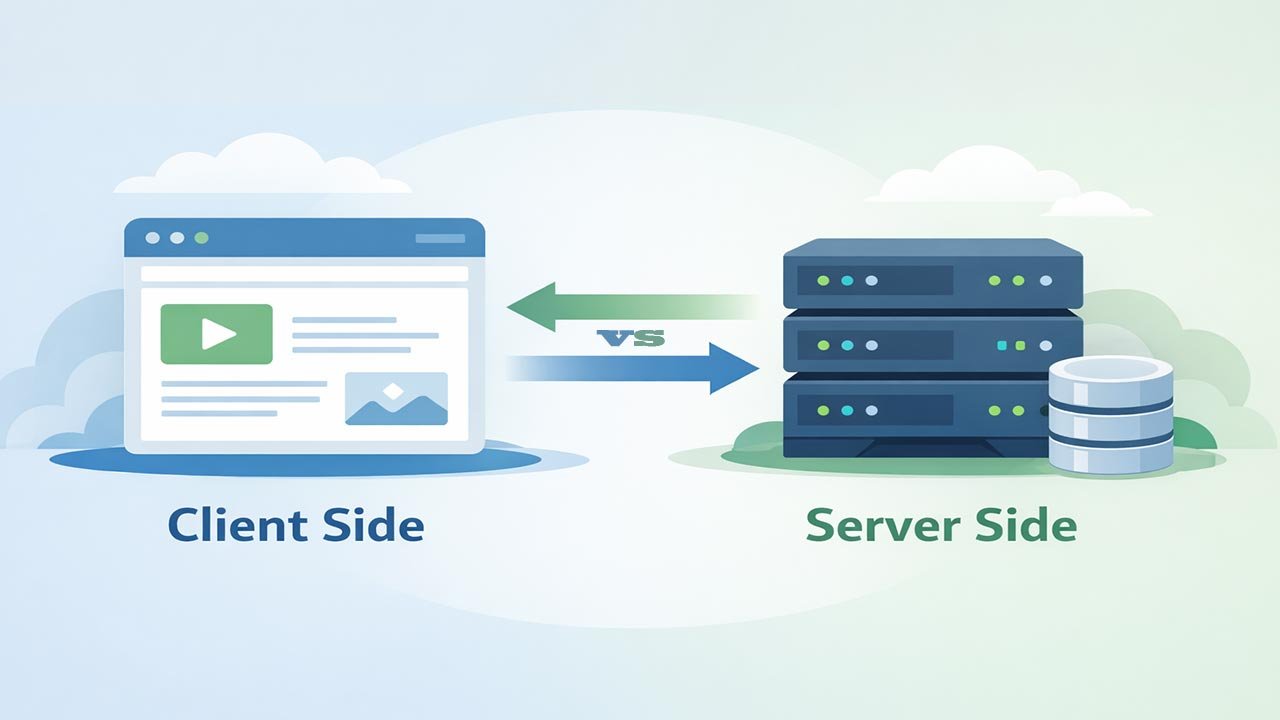
What Does Client Side and Server Side Mean?
Understanding the difference between client side and server side is essential to understanding how modern websites, web apps, and digital platforms work. Every time a user loads a webpage, submits a form, or streams content, a coordinated process happens between the user’s device and a remote system. Client side and server side describe where that processing takes place and who is responsible for what.
Table of Contents
- What Client Side Means
- What Server Side Means
- How Client Side and Server Side Work Together
- Key Differences Between Client Side and Server Side
- Real-World Examples
- Why Client Side vs Server Side Matters
- Common Misconceptions
- Future Trends in Client and Server Architecture
- Top 5 Frequently Asked Questions
- Final Thoughts
- Resources
What Client Side Means
Client side refers to everything that happens on the user’s device. This includes desktop computers, laptops, tablets, and smartphones. When a website loads in a browser, the browser becomes the “client” that interprets and executes instructions sent from the server. Client-side processing handles how content looks and how users interact with it. This includes layouts, animations, form validation, button clicks, and interactive elements. The goal is to create a responsive, fast, and visually engaging user experience. Common client-side technologies include HTML for structure, CSS for styling, and JavaScript for interactivity. These technologies run directly in the browser without needing constant communication with the server. For example, when a user clicks a dropdown menu or sees an error message appear before submitting a form, that logic is happening on the client side. No server request is required for those actions.
What Server Side Means
Server side refers to processing that happens on a remote server rather than on the user’s device. The server stores data, runs application logic, handles authentication, and responds to client requests. When a user submits a form, logs in, or requests data, the request is sent to the server. The server processes the request, performs necessary operations, and sends a response back to the client. Server-side processing is responsible for tasks that require security, persistence, or heavy computation. This includes database queries, payment processing, user authentication, and content generation. Common server-side languages include JavaScript running on servers, Python, PHP, Java, and Ruby. These systems ensure data integrity, enforce business rules, and control access to sensitive information.
How Client Side and Server Side Work Together
Client side and server side are not competing approaches. They are complementary components of the same system. A typical interaction starts on the client side. A user clicks a button or loads a page. The client sends a request to the server. The server processes the request, retrieves or updates data, and sends a response back. The client then updates the interface based on that response. For example, when a user logs into a website, the client collects the username and password and sends them securely to the server. The server verifies the credentials and returns a success or failure response. The client then displays the appropriate message or redirects the user. This separation of responsibilities improves performance, security, and scalability when implemented correctly.
Key Differences Between Client Side and Server Side
The most important difference is where the code runs. Client-side code runs in the user’s browser, while server-side code runs on a remote server. Client-side processing is faster for visual feedback because it does not require a round trip to the server. Server-side processing is more secure because users cannot directly access or manipulate the code. Client-side code is visible to users, making it unsuitable for sensitive logic. Server-side code is hidden and protected, making it ideal for enforcing rules and handling private data. Client-side systems depend on the user’s device performance. Server-side systems depend on server infrastructure and scalability planning.
Real-World Examples
A shopping cart updating item quantities without reloading the page is client-side functionality. The visual update happens instantly in the browser. Placing an order, calculating taxes, and charging a credit card are server-side operations. These tasks require secure processing and access to backend systems. Autocomplete search suggestions often combine both approaches. The typing interaction is client side, while fetching suggestions from a database is server side. Streaming platforms use client-side code to manage playback controls and server-side systems to deliver content and manage user subscriptions.
Why Client Side vs Server Side Matters
Understanding client side and server side helps businesses and developers make better architectural decisions. Poor separation can lead to security vulnerabilities, slow performance, and poor user experience. Client-side optimization improves responsiveness and reduces server load. Server-side optimization improves reliability, data security, and compliance with regulations. From a cost perspective, excessive server-side processing increases infrastructure expenses. From a security perspective, excessive client-side logic increases risk. Well-balanced systems distribute responsibilities strategically, leveraging the strengths of both sides.
Common Misconceptions
One common misconception is that client-side applications do not need servers. In reality, almost all applications still rely on server-side systems for data and authentication. Another misconception is that server-side rendering is always slower. In many cases, it improves initial page load speed and search engine visibility. Some believe client-side code is insecure by default. While it is exposed, proper design limits what the client can control.
Future Trends in Client and Server Architecture
Modern architectures increasingly blur the line between client side and server side. Cloud computing, edge computing, and serverless functions move logic closer to users while maintaining centralized control. Progressive web applications rely heavily on client-side capabilities while still depending on server-side APIs. Edge servers allow certain server-side logic to execute geographically closer to clients, reducing latency. The future favors flexible systems where responsibilities shift dynamically based on performance, security, and cost considerations.
Top 5 Frequently Asked Questions
Final Thoughts
Client side and server side represent the foundation of how digital systems operate. The client side focuses on interaction, speed, and user experience, while the server side focuses on security, data, and control. The most effective systems balance both, assigning each responsibility where it performs best. Understanding this distinction empowers better technology decisions, more secure applications, and more scalable digital products.
{ "@context": "https://schema.org", "@type": "FAQPage", "mainEntity": [ { "@type": "Question", "name": "Is JavaScript client side or server side?", "acceptedAnswer": { "@type": "Answer", "text": "JavaScript can run on both the client side in browsers and on the server side using server environments." } }, { "@type": "Question", "name": "Which is more secure, client side or server side?", "acceptedAnswer": { "@type": "Answer", "text": "Server-side processing is more secure because users cannot access or modify the code." } }, { "@type": "Question", "name": "Can a website work without client-side code?", "acceptedAnswer": { "@type": "Answer", "text": "Yes, but it will be less interactive and responsive." } }, { "@type": "Question", "name": "Why not do everything on the server side?", "acceptedAnswer": { "@type": "Answer", "text": "Doing everything on the server increases load and reduces responsiveness." } }, { "@type": "Question", "name": "Do mobile apps use client side and server side?", "acceptedAnswer": { "@type": "Answer", "text": "Yes, mobile apps use local client-side logic and communicate with servers for data and services." } } ] }




Leave A Comment