


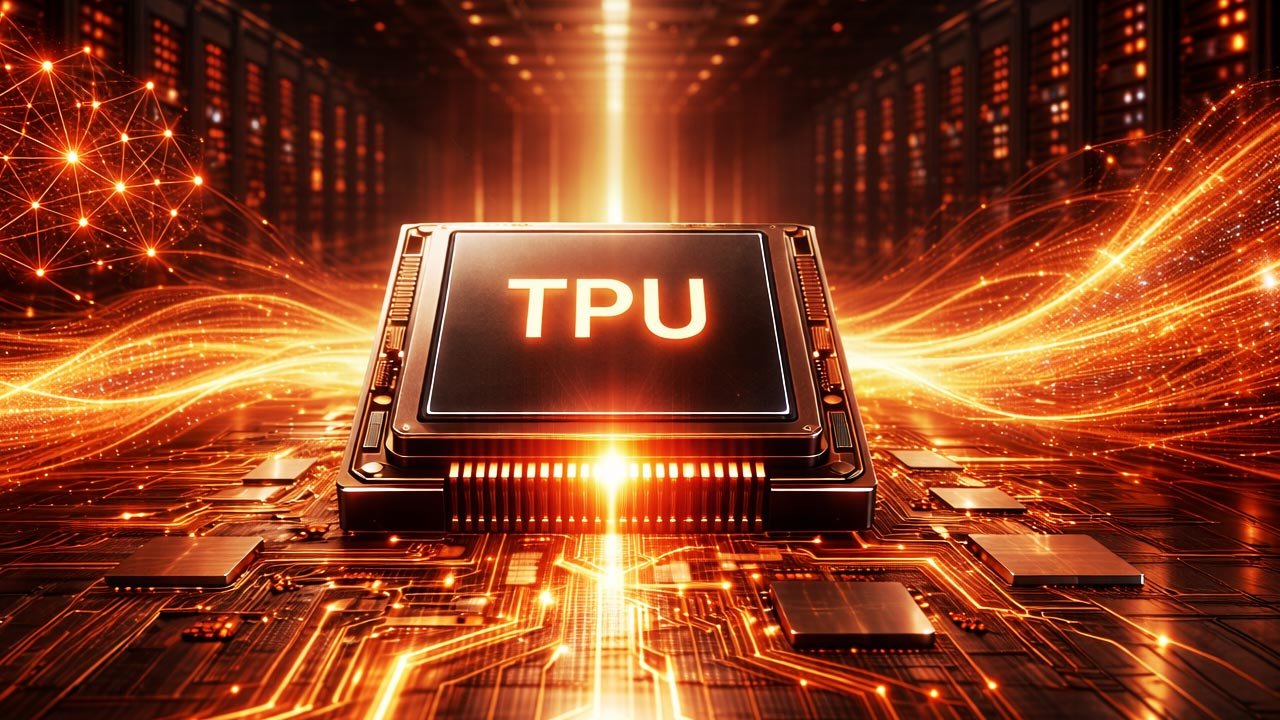
What Is a TPU (Tensor Processing Unit)?
A Tensor Processing Unit, or TPU, is a specialized processor designed specifically to accelerate machine learning workloads. Unlike general-purpose CPUs or graphics-focused GPUs, TPUs are built from the ground up to efficiently process large-scale tensor computations, which are the mathematical backbone of modern artificial intelligence systems. TPUs play a critical role in training and deploying deep learning models at scale.
Table of Contents
- Defining a Tensor Processing Unit
- Why TPUs Were Created
- How TPU Architecture Works
- TPU vs GPU vs CPU
- Real-World Applications of TPUs
- Advantages and Limitations
- The Future of TPU Technology
- Top 5 Frequently Asked Questions
- Final Thoughts
- Resources
Defining a Tensor Processing Unit
A TPU is an application-specific integrated circuit optimized for machine learning inference and training. Its core purpose is to perform tensor operations—especially matrix multiplications—at extremely high speed and low power consumption. These operations dominate workloads in neural networks, including convolutional neural networks and transformer models. Unlike CPUs, which are optimized for sequential logic and task switching, TPUs prioritize throughput over latency. This makes them ideal for large batches of data processed in parallel, such as training language models or image classifiers.
Why TPUs Were Created
As machine learning models grew larger and more complex, traditional hardware became a bottleneck. GPUs significantly improved performance, but they were still designed for graphics workloads first and AI workloads second. Google introduced TPUs in 2016 after internal research revealed that AI inference demands were doubling every few months. Relying solely on CPUs would have required unsustainable increases in data center power and cost. TPUs solved this by delivering orders-of-magnitude improvements in performance per watt. According to Google, early TPU deployments improved inference efficiency by up to 30x compared to CPU-only systems while reducing energy consumption dramatically.
How TPU Architecture Works
At the heart of a TPU is a systolic array, a grid of processing elements that pass data rhythmically through the chip. This design minimizes memory access delays, which are one of the biggest performance killers in AI workloads.
Key architectural features include:
- Massive matrix multiplication units
- High-bandwidth on-chip memory
- Reduced precision arithmetic (bfloat16)
- Optimized dataflow execution
By limiting flexibility and focusing on specific operations, TPUs achieve extreme efficiency. This trade-off is intentional and aligns perfectly with the predictable computation patterns of neural networks.
TPU vs GPU vs CPU
Understanding TPUs requires context against other processors. CPUs are generalists. They handle diverse workloads but struggle with parallel numerical computation. GPUs excel at parallelism and are widely used for AI training. However, they still carry architectural overhead from graphics processing. TPUs remove unnecessary components and focus purely on tensor math. In benchmarks, TPUs often outperform GPUs in large-scale training tasks, especially when models are designed using TensorFlow. That said, GPUs remain more flexible, supporting a wider range of frameworks and custom operations.
Real-World Applications of TPUs
TPUs power many of Google’s most critical AI services, including:
- Search ranking algorithms
- Google Translate
- Voice recognition systems
- Large language models
Through Google Cloud, external organizations can also access TPUs for training and deploying models. This has enabled startups and research institutions to experiment with massive models that would otherwise be cost-prohibitive.
Advantages and Limitations
Advantages include:
- Exceptional performance per watt
- Scalability across large clusters
- Optimized for deep learning workloads
Limitations include:
- Less flexibility than GPUs
- Primarily optimized for TensorFlow
- Limited availability outside cloud environments
From a technology management perspective, TPUs represent a classic example of vertical optimization—hardware designed specifically for a dominant workload.
The Future of TPU Technology
As AI models continue to scale, TPUs are evolving rapidly. New generations introduce higher bandwidth, better memory integration, and improved interconnects for distributed training. Industry experts predict that domain-specific accelerators like TPUs will increasingly replace general-purpose hardware in AI data centers. This shift reflects a broader trend toward specialization as performance, cost, and sustainability pressures increase.
Top 5 Frequently Asked Questions
Final Thoughts
TPUs demonstrate how specialized hardware can redefine performance limits in artificial intelligence. By aligning silicon design with mathematical reality, TPUs enable breakthroughs that would be impractical on general-purpose processors. For organizations managing innovation at scale, TPUs are not just faster chips—they are a strategic advantage.
Resources
- https://cloud.google.com/tpu
- https://ai.googleblog.com
- https://www.tensorflow.org/guide/tpu




Leave A Comment