


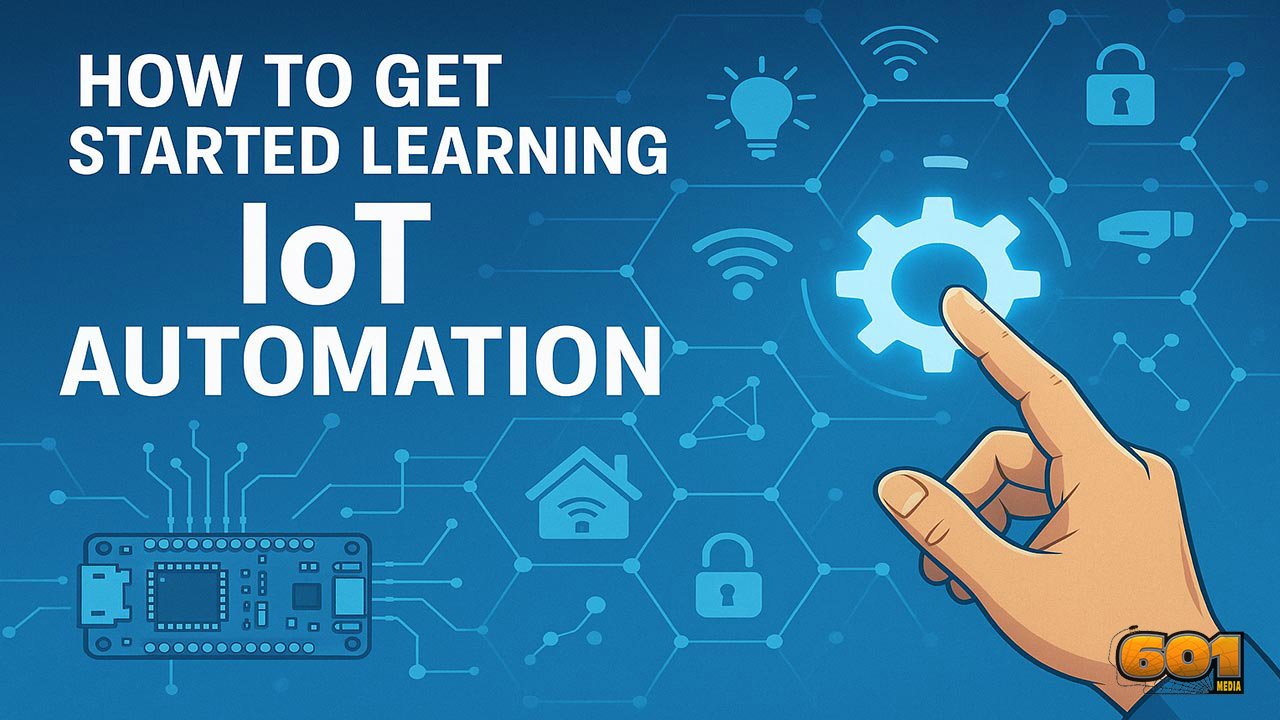
How to Get Started Learning IoT Automation
IoT automation is transforming how industries operate, products are built, and decisions are made. This guide breaks down how beginners can systematically learn IoT automation, from foundational concepts to tools, platforms, and real-world applications, without feeling overwhelmed.
Table of Contents
- What IoT Automation Really Means
- Why Learning IoT Automation Matters Now
- Core Components of IoT Automation
- Essential Skills You Need to Learn
- Tools and Platforms for Beginners
- A Practical Learning Path
- Real-World IoT Automation Use Cases
- Common Beginner Mistakes to Avoid
- Top 5 Frequently Asked Questions
- Final Thoughts
- Resources
What IoT Automation Really Means
IoT automation refers to systems where connected devices collect data, communicate with each other, and trigger actions automatically without human intervention. These actions are governed by rules, logic, or machine learning models. At its core, IoT automation combines sensors, connectivity, data processing, and control mechanisms. A temperature sensor detects heat, sends data to a platform, and automatically turns on cooling systems based on predefined thresholds. The power of IoT automation lies in its ability to reduce manual effort, increase efficiency, and enable real-time decision-making at scale.
Why Learning IoT Automation Matters Now
The global IoT market is projected to exceed $1 trillion by 2030, driven largely by automation in manufacturing, healthcare, logistics, energy, and smart cities. Organizations are no longer asking whether to automate but how fast they can do it. From an innovation management perspective, IoT automation creates competitive advantage by lowering operational costs, improving reliability, and unlocking new data-driven business models. Professionals who understand these systems are increasingly valuable because they bridge hardware, software, and business strategy.
Core Components of IoT Automation
Every IoT automation system is built on a small set of repeatable building blocks.
Devices and Sensors
These are the physical endpoints that measure variables such as temperature, motion, pressure, or energy usage.
Connectivity
Devices communicate through protocols like MQTT, HTTP, CoAP, Wi-Fi, cellular, or LoRaWAN depending on range, power, and data needs.
Data Processing
Data is processed at the edge, in the cloud, or both. This is where automation logic lives.
Automation Logic
Rules engines, workflows, or AI models decide when and how actions are triggered.
Actuators
These execute actions, such as opening valves, switching relays, or sending alerts.
Essential Skills You Need to Learn
Learning IoT automation does not require mastering everything at once, but it does demand cross-disciplinary thinking.
Basic Electronics
Understanding voltage, current, sensors, and microcontrollers like Arduino or ESP32 is foundational.
Programming
Python and JavaScript are widely used for IoT automation logic, data handling, and integrations.
Networking Fundamentals
Knowing how devices communicate, handle latency, and secure data is critical.
Cloud Platforms
Most automation systems rely on cloud services for scalability and reliability.
System Thinking
IoT automation is about designing systems, not just writing code or wiring hardware.
Tools and Platforms for Beginners
Choosing beginner-friendly tools accelerates learning.
Hardware Platforms
Arduino, Raspberry Pi, and ESP-based boards are affordable and well-documented.
IoT Platforms
AWS IoT Core, Azure IoT Hub, and Google Cloud IoT provide managed services for messaging, rules, and automation.
No-Code and Low-Code Tools
Node-RED is especially powerful for visual automation workflows and rapid prototyping.
Simulation Tools
Digital twins and simulators allow experimentation without physical hardware.
A Practical Learning Path
Start small and build progressively. Begin by automating a single sensor-action loop, such as turning on a light when motion is detected. Then add cloud dashboards, alerts, and remote control. Next, introduce conditional logic, scheduling, and data storage. Finally, explore analytics and machine learning to enable predictive automation. This staged approach mirrors how real-world IoT systems are deployed and scaled.
Real-World IoT Automation Use Cases
IoT automation is already embedded in everyday systems.
Smart Manufacturing
Automated quality checks and predictive maintenance reduce downtime by up to 50 percent.
Healthcare
Remote patient monitoring automates alerts for abnormal vitals, improving response times.
Energy Management
Smart grids and buildings automatically optimize energy consumption based on demand.
Agriculture
Automated irrigation systems reduce water usage while increasing crop yield.
Common Beginner Mistakes to Avoid
One common mistake is focusing only on devices and ignoring data flow and automation logic. Another is underestimating security, which is critical from day one. Beginners also tend to over-engineer solutions instead of validating small prototypes first. Simplicity scales better than complexity.
Top 5 Frequently Asked Questions
Final Thoughts
Learning IoT automation is less about mastering tools and more about understanding how connected systems create value. The most successful learners think in terms of outcomes, workflows, and scalability. By starting small, choosing the right platforms, and building real projects, you develop skills that remain relevant as technologies evolve.
Resources
- McKinsey Global Institute – The Internet of Things: Mapping the Value Beyond the Hype
- IEEE Internet of Things Journal
- AWS IoT Documentation
- Node-RED Official Documentation
- Harvard Business Review – Competing in the Age of AI





Leave A Comment