


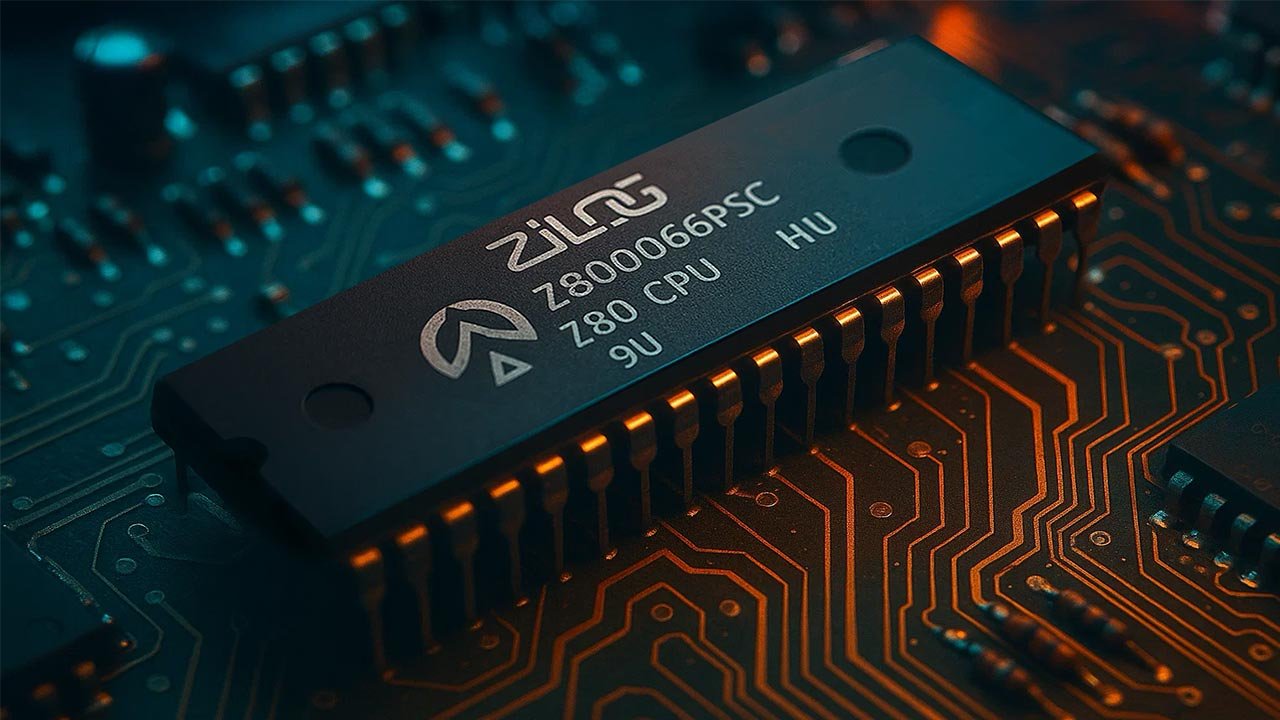
Zilog Z80 the 8-Bit Processor That Changed Computing Forever: A Quick Guide
A practical overview of the iconic 8-bit Zilog Z80 microprocessor—its architecture, performance characteristics, use cases, and its enduring impact on modern computing.
Table of Contents
- Z80 Overview
- Core Architecture
- Historical and Modern Applications
- Industry Impact and Innovation Legacy
- Top 5 Frequently Asked Questions
- Final Thoughts
- Resources
Z80 Overview
The Zilog Z80 is an 8-bit microprocessor introduced in 1976 and engineered by Federico Faggin, one of the architects behind the Intel 4004 and 8080. It quickly became a foundational CPU in early home computers, embedded systems, arcade games, and industrial controllers.
Its early rise came from several critical advantages: backward compatibility with the Intel 8080, a richer instruction set, more flexible interrupt handling, and competitive pricing. These characteristics made the Z80 a preferred choice for system designers seeking power without complexity.
Core Architecture
The internal design of the Z80 offered exceptional performance for its era. Although limited to 8-bit data operations, the chip integrated features normally requiring multiple components in competing designs.
Register Set
The Z80 expanded the classic 8080 register model by including duplicate register banks. This allowed fast context switching, an important advantage in multitasking or interrupt-driven systems. Its register architecture includes:
- General-purpose registers: AF, BC, DE, HL
- Alternate register bank: AF’, BC’, DE’, HL’
- Index registers: IX, IY (unique features enabling advanced memory indexing)
- Stack pointer (SP) and program counter (PC)
- Dedicated interrupt register (I) and refresh register (R)
This design allowed the Z80 to outperform many contemporaries despite similar clock speeds.
Instruction Capabilities
The Z80 instruction set includes more than 150 opcodes and over 700 instruction combinations when factoring in prefixes. Its strengths include:
- Powerful block operations enabling fast memory copying
- Bit manipulation instructions suited for control systems
- Indexed addressing for advanced data structures
- Enhanced arithmetic and logical operations
These improvements significantly simplified assembly programming and reduced external logic requirements.
Historical and Modern Applications
The Z80 gained worldwide adoption because of its reliability and low-cost integration. Historically, it powered devices such as:
- TRS-80 home computers
- Sinclair ZX Spectrum
- MSX systems
- CP/M business computers
- Arcade machines including Pac-Man and Galaga
Even decades later, the Z80 remains in production and appears in embedded systems including:
- Industrial controllers
- Consumer electronics
- Point-of-sale devices
- Retrocomputer kits and hobbyist platforms
Its predictable timing, instruction simplicity, and stable ecosystem make it highly suitable for long-life embedded designs.
Industry Impact and Innovation Legacy
The Z80’s influence extends far beyond its original release. Industry analysts credit the Z80 for accelerating personal computing adoption by enabling affordable, user-friendly systems. It also allowed software ecosystems such as CP/M to flourish, providing a foundation for early business productivity tools.
From an innovation-management view, the Z80 represents a breakthrough in strategic differentiation: Zilog identified weaknesses of the Intel 8080 and designed a processor that met real developer needs—simplified system integration, a richer instruction set, and backward compatibility. This combination helped Zilog capture market segments that larger competitors overlooked.
Top 5 Frequently Asked Questions
Final Thoughts
The Zilog Z80 stands as one of the most influential microprocessors ever created. Beyond its technical strengths, the Z80 disrupted an emerging market and set a standard for balancing compatibility, performance, and cost. Its rich instruction set, flexible architecture, and predictable execution model make it a favorite among hardware engineers even today. The Z80’s longevity demonstrates how thoughtful design and strategic innovation can transcend technological generations.
Resources
- Zilog Official Documentation
- CPU Shack Microprocessor Archive
- Federico Faggin Interviews and Technical Papers
- Retrocomputing Hardware References




Leave A Comment